Key Takeaways:
- A Full Moon occurs when the Earth is between the Sun and the Moon.
- The Moon's orbit creates different phases, including a Full Moon.
- Full Moons have traditional names, like the Sturgeon Moon.
- The 2025 Full Moon schedule shows dates and times for each Full Moon.
The phenomenon of a Full Moon arises when our planet, Earth, is precisely sandwiched between the Sun and the Moon. This alignment ensures the entire side of the Moon that faces us gleams under sunlight. Thanks to the Moon’s orbit around Earth, the angle of sunlight hitting the lunar surface and being reflected back to our planet changes. That creates different lunar phases.
The next Full Moon will be the Beaver Moon, which occurs at 8:19 a.m. on Wednesday, Nov. 5, 2025. This Full Moon will also be a Super Moon.
We’ll update this article multiple times each week with the latest moonrise, moonset, Full Moon schedule, and some of what you can see in the sky each week.
Here’s the complete list of Full Moons this year and their traditional names.
2025 Full Moon schedule and names of each
(All times Eastern; * denotes a Super Moon.)
- Monday, Jan. 13 — 5:27 p.m. — Wolf Moon
- Wednesday, Feb. 12 — 8:53 a.m. — Snow Moon
- Friday, March 14 — 2:55 a.m. — Worm Moon
- Saturday, April 12 — 8:22 p.m. — Pink Moon
- Monday, May 12 — 12:56 p.m. — Flower Moon
- Wednesday, June 11 — 3:44 a.m. — Strawberry Moon
- Thursday, July 10 — 4:37 p.m. — Buck Moon
- Saturday, Aug. 9 — 3:55 a.m. — Sturgeon Moon
- Sunday, Sept. 7 — 2:09 p.m. — Corn Moon
- Monday, Oct. 6 — 11:48 p.m. — Hunter’s Moon*
- Wednesday, Nov. 5 — 8:19 a.m. — Beaver Moon*
- Thursday, Dec. 4 — 6:14 p.m. — Cold Moon*
The phases of the Moon in November 2025
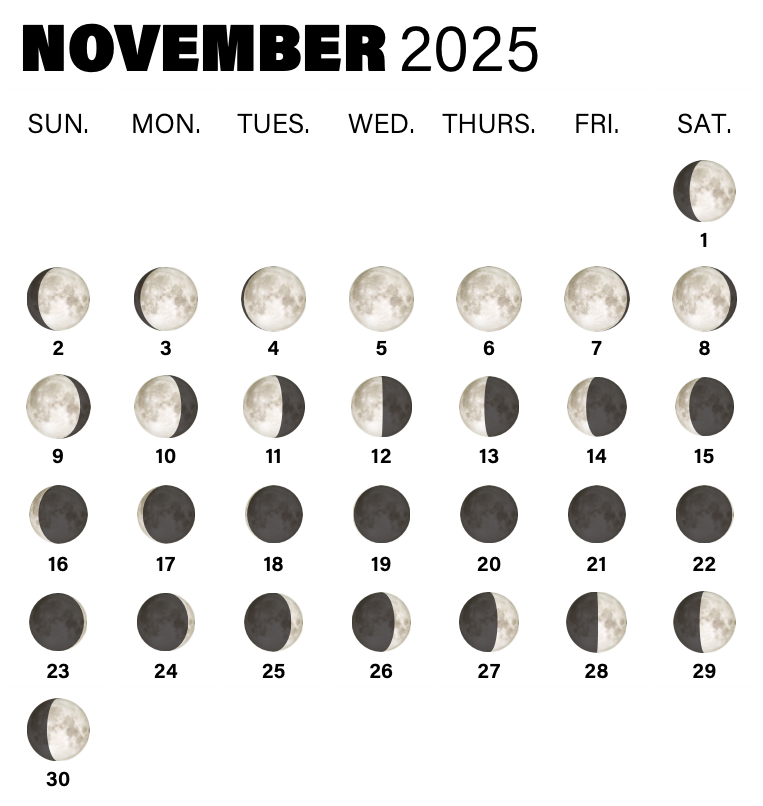
The images below show the day-by-day phases of the Moon in November. The Full Moon this month will be on Wednesday, Nov. 5.
The moonrise and moonset schedule this week
The times below for sunrise, sunset, moonrise, and moonset are given in local time from 40° N 90° W. The Moon’s illumination is given at 10 P.M. local time from the same location. All other times are Eastern unless otherwise specified. For more details on upcoming sky events, check out our full Sky This Week column.
Saturday, November 1
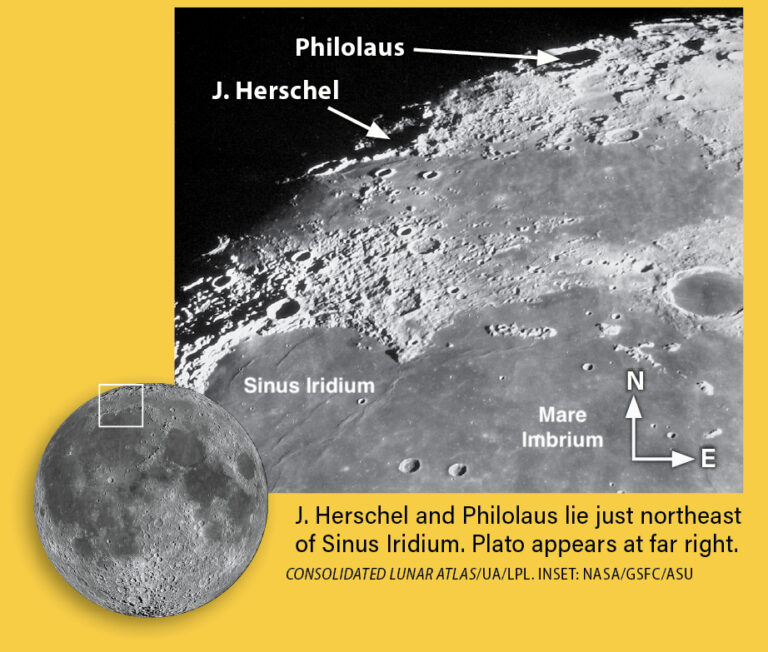
Tonight is a chance to view the remains of a huge impact crater on the Moon: Sinus Iridium, which carves out a chunk of Mare Imbrium.
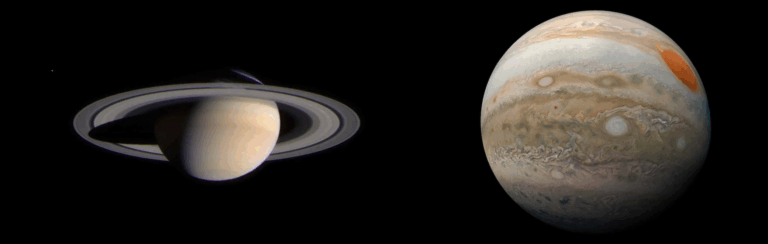
You can begin viewing the Moon any time this evening, as it is already above the horizon at sunset. By 7 P.M. local daylight time, you’ll find our satellite in the southeastern sky, just to the upper right of 1st-magnitude Saturn. Zoom in on our satellite with a telescope and look toward its northwestern limb, where you’ll find the round edge of Sinus Iridium poking out of northwestern Mare Imbrium.
Stretching some 160 miles (258 kilometers) wide, Sinus Iridium’s own northwestern edge is formed by the rugged Jura Mountains. It has no southeastern rim, instead appearing to flow right into the larger Mare Imbrium. This is because lava from that overlapping “sea” flooded into Sinus Iridium several times over a period ranging from about 3.4 billion to 1.2 billion years ago.
Slightly north of Sinus Iridium, there’s rugged terrain just now coming under sunrise. Look for the craters J. Herschel and Philolaus. The former spans some 96 miles (155 km) and is about twice as wide as the latter, and also much older as well.
Sunrise: 7:30 A.M.
Sunset: 5:57 P.M.
Moonrise: 3:48 P.M.
Moonset: 2:41 A.M.
Moon Phase: Waxing gibbous (84%)
Sunday, November 2
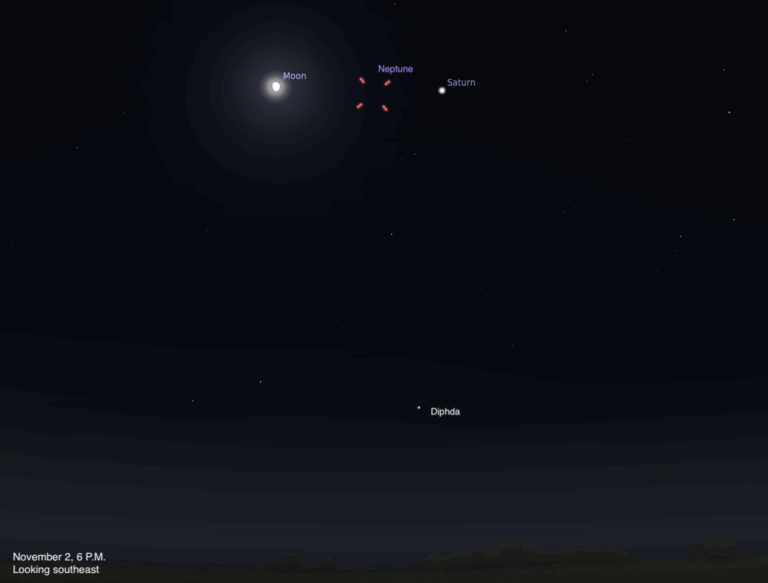
The Moon passes 4° north of Saturn at 6 A.M. EST, then passes 3° north of Neptune at noon EST. This evening after sunset, you’ll find the waxing Moon located to the upper left of naked-eye Saturn in the southeastern sky. Neptune is between them, though the magnitude 7.7 planet cannot be seen without optical aid. However, it may be difficult to see the faint, distant ice giant with the bright Moon nearby.
Sunrise: 6:30 A.M.
Sunset: 4:56 P.M.
Moonrise: 3:12 P.M.
Moonset: 2:53 A.M.
Moon Phase: Waxing gibbous (92%)
Monday, November 3
Sunrise: 6:32 A.M.
Sunset: 4:55 P.M.
Moonrise: 3:38 P.M.
Moonset: 4:07 A.M.
Moon Phase: Waxing gibbous (97%)
Tuesday, November 4
Sunrise: 6:33 A.M.
Sunset: 4:54 P.M.
Moonrise: 4:07 P.M.
Moonset: 5:25 A.M.
Moon Phase: Full
Wednesday, November 5
November’s Full Moon occurs at 8:19 A.M. EST. This month’s Full Moon is also called the Beaver Moon.
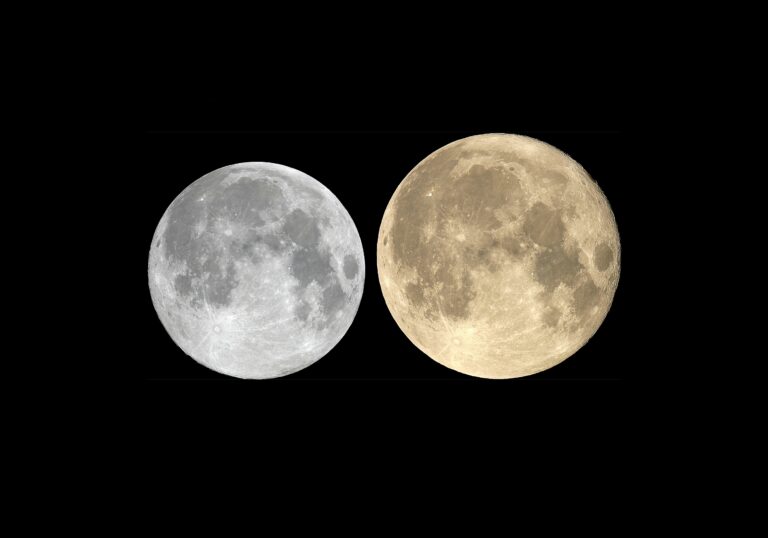
The Moon also reaches perigee, the closest point to Earth in its orbit, just hours later, at 5:27 P.M. EST. Our satellite is then 221,726 miles (356,833 km) away. When these two events — the Full phase and perigee — coincide, we see a phenomenon called a Super Moon, during which the Moon appears slightly larger and brighter than normal. In this case, as the Moon rises this evening, it appears 33.5’ wide. Compare that to its average size of 31’ — not a huge difference, but you may notice it seems a bit brighter tonight than at other times during the year. The Full Moon rises around sunset and sets around sunrise, so there’s plenty of time to enjoy it, no matter when you step outside to take a look.
This is the second of three Super Moons in 2025, with next month closing out the year with the December Cold Moon as a Super Moon as well. The definition of a Super Moon is a little loose, however, as it is not an official designation. So, outlets often determine their own threshold for how close a Full Moon must be to perigee to qualify. According to Farmers’ Almanac, 2026 will carry three Super Moons as well, in January, November, and December. But according to the Royal Museums Greenwich, only the December Full Moon occurs close enough to perigee to earn “super” status.
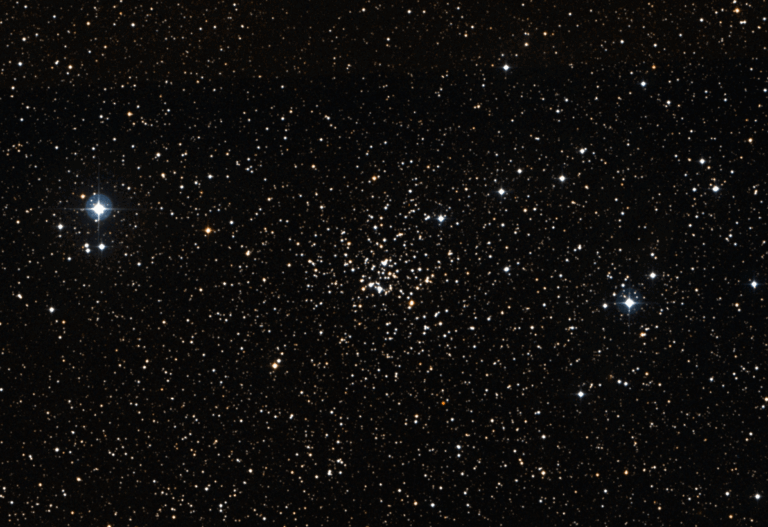
The Moon rises in Aries this evening, leading the Pleiades (M45) into the sky as our satellite stands 10° west of the young group of stars. By tomorrow, their positions will be reversed, with M45 leading the way and the Moon trailing, having moved east of the open cluster.
Observers can watch overnight as the Moon crosses the rest of Aries and finally moves into Taurus shortly after 5:30 A.M. EST on the 6th. After both have set for those in the contiguous U.S., the Moon will make its way across several stars in the Pleiades in an occultation visible from parts of Alaska, Asia, and Europe.
Sunrise: 6:34 A.M.
Sunset: 4:53 P.M.
Moonrise: 4:42 P.M.
Moonset: 6:46 A.M.
Moon Phase: Waning gibbous (99%)
Thursday, November 6
The Moon passes 5° north of Uranus at noon EST and rises east of the Pleiades this evening.
Sunrise: 6:35 A.M.
Sunset: 4:52 P.M.
Moonrise: 5:27 P.M.
Moonset: 8:09 A.M.
Moon Phase: Waning gibbous (96%)
Friday, November 7
Sunrise: 6:36 A.M.
Sunset: 4:50 P.M.
Moonrise: 6:22 P.M.
Moonset: 9:29 A.M.
Moon Phase: Waning gibbous (90%)
Saturday, November 8
Sunrise: 6:37 A.M.
Sunset: 4:49 P.M.
Moonrise: 7:29 P.M.
Moonset: 10:38 A.M.
Moon Phase: Waning gibbous (82%)
The phases of the Moon
The phases of the Moon are: New Moon, waxing crescent, First Quarter, waxing gibbous, Full Moon, waning gibbous, Last Quarter, and waning crescent. A cycle starting from one Full Moon to its next counterpart, termed the synodic month or lunar month, lasts about 29.5 days.
Though a Full Moon only occurs during the exact moment when Earth, Moon, and Sun form a perfect alignment, to our eyes, the Moon seems Full for around three days.
RELATED: 20 things to see on the Moon
Different names for different types of Full Moon
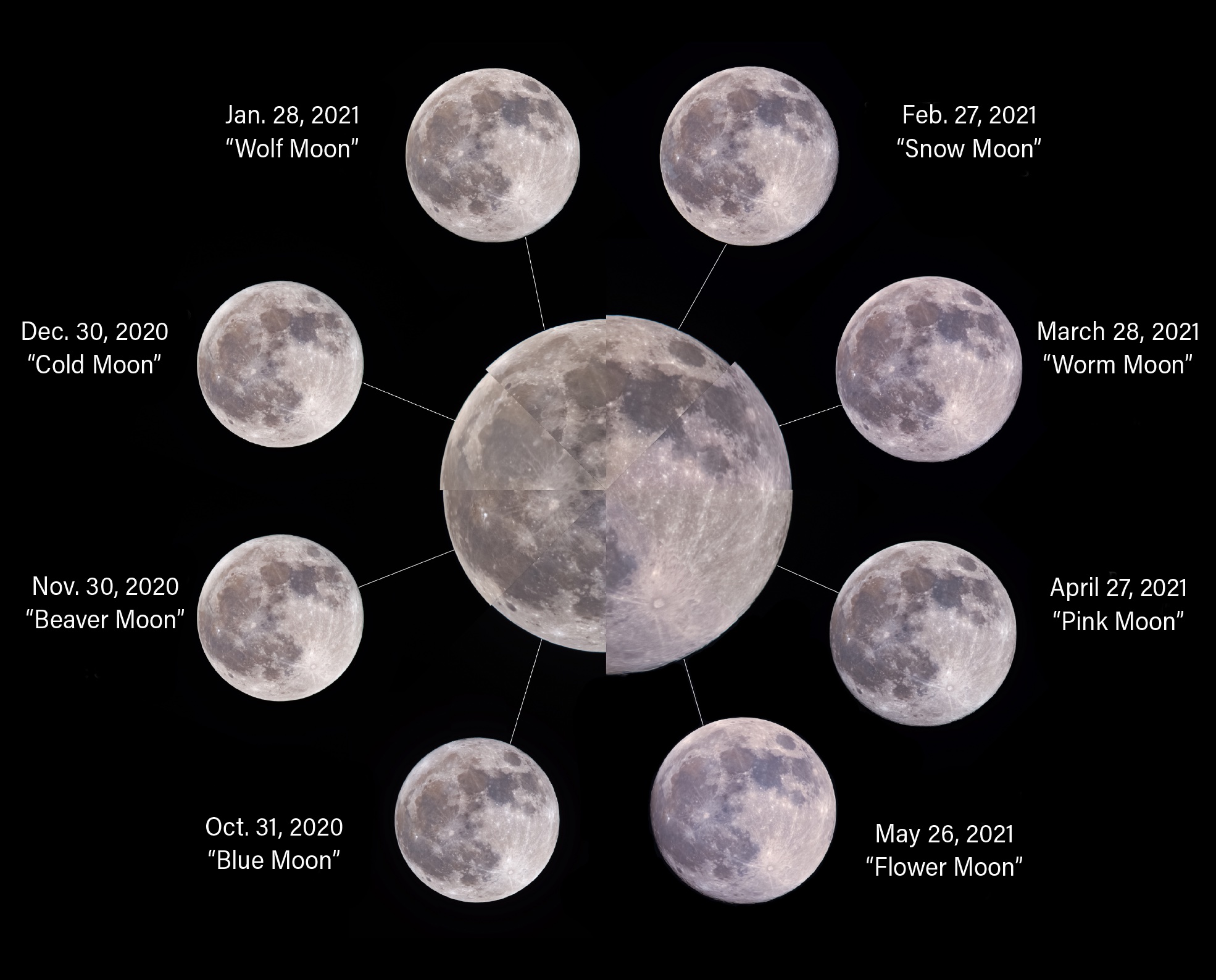
There are a wide variety of specialized names used to identify distinct types or timings of Full Moons. These names primarily trace back to a blend of cultural, agricultural, and natural observations about the Moon, aimed at allowing humans to not only predict seasonal changes, but also track the passage of time.
For instance, almost every month’s Full Moon boasts a name sourced from Native American, Colonial American, or other North American traditions, with their titles mirroring seasonal shifts and nature’s events.
Wolf Moon (January): Inspired by the cries of hungry wolves.
Snow Moon (February): A nod to the month’s often heavy snowfall.
Worm Moon (March): Named after the earthworms that signal thawing grounds.
Pink Moon (April): In honor of the blossoming pink wildflowers.
Flower Moon (May): Celebrating the bloom of flowers.
Strawberry Moon (June): Marks the prime strawberry harvest season.
Buck Moon (July): Recognizing the new antlers on bucks.
Sturgeon Moon (August): Named after the abundant sturgeon fish.
Corn Moon (September): Signifying the corn harvesting period.
Hunter’s Moon (October): Commemorating the hunting season preceding winter.
Beaver Moon (November): Reflects the time when beavers are busy building their winter dams.
Cold Moon (December): Evocative of winter’s chill.
In addition, there are a few additional names for Full Moons that commonly make their way into public conversations and news.
Super Moon: This term is reserved for a Full Moon that aligns with the lunar perigee, which is the Moon’s nearest point to Earth in its orbit. This proximity renders the Full Moon unusually large and luminous. For a Full Moon to earn the Super Moon tag, it should be within approximately 90 percent of its closest distance to Earth.
Blue Moon: A Blue Moon is the second Full Moon in a month that experiences two Full Moons. This phenomenon graces our skies roughly every 2.7 years. Though the term suggests a color, Blue Moons aren’t truly blue. Very occasionally, atmospheric conditions such as recent volcanic eruptions might lend the Moon a slightly blueish tint, but this hue isn’t tied to the term.
Black Moon: A Black Moon is a recent, unofficial term that can describe one of two situations. Either the third of four New Moons in a single astronomical season or the second of two New Moons in a month is a Black Moon. As its name suggests, the Black Moon is completely dark, as it is a New Moon that occurs when the Moon is between the Sun and Earth. The New Moon cannot be observed except during a total solar eclipse.
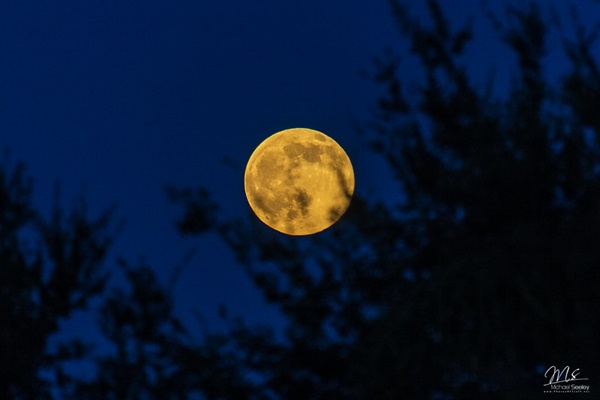
Harvest Moon: Occurring closest to the autumnal equinox, typically in September, the Harvest Moon is often renowned for a distinct orange tint it might display. This Full Moon rises close to sunset and sets near sunrise, providing extended hours of bright moonlight. Historically, this was invaluable to farmers gathering their produce.
Common questions about Full Moons
What is the difference between a Full Moon and a New Moon? A Full Moon is witnessed when Earth is between the Sun and the Moon, making the entire Moon’s face visible. Conversely, during a New Moon, the Moon lies between Earth and the Sun, shrouding its Earth-facing side in darkness.
How does the Full Moon influence tides? The Moon’s gravitational tug causes Earth’s waters to bulge, birthing tides. During both Full and New Moons, the Sun, Earth, and Moon are in alignment, generating “spring tides.” These tides can swing exceptionally high or low due to the combined gravitational influences of the Sun and Moon.
Here are the dates for all the lunar phases in 2025:
| New | First Quarter | Full | Last Quarter |
|---|---|---|---|
| Jan. 6 | Jan. 13 | Jan. 21 | |
| Jan. 29 | Feb. 5 | Feb. 12 | Feb. 20 |
| Feb. 27 | March 6 | March 14 | March 22 |
| March 29 | April 4 | April 12 | April 20 |
| April 27 | May 4 | May 12 | May 20 |
| May 26 | June 2 | June 11 | June 18 |
| June 25 | July 2 | July 10 | July 17 |
| July 24 | Aug. 1 | Aug. 9 | Aug. 16 |
| Aug. 23 | Aug. 31 | Sept. 7 | Sept. 14 |
| Sept. 21 | Sept. 29 | Oct. 6 | Oct. 13 |
| Oct. 21 | Oct. 29 | Nov. 5 | Nov. 12 |
| Nov. 20 | Nov. 28 | Dec. 4 | Dec. 11 |
| Dec. 19 | Dec. 27 |