
Key Takeaways:
- M83, a barred spiral galaxy, is characterized by its substantial apparent size (14') and high visual magnitude (7.5), ranking it among the brightest galaxies observable.
- Its declination of –30° establishes M83 as the southernmost galaxy cataloged by Messier.
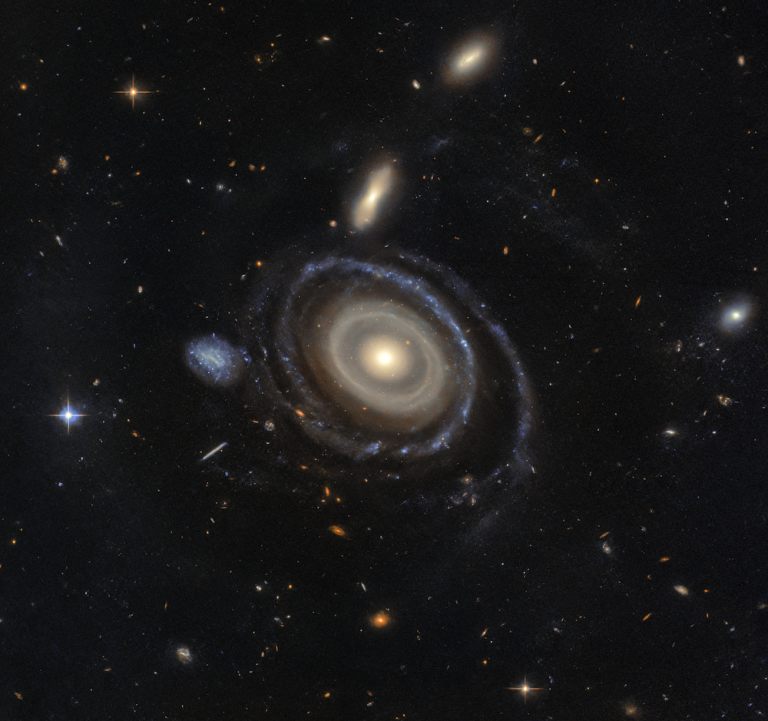
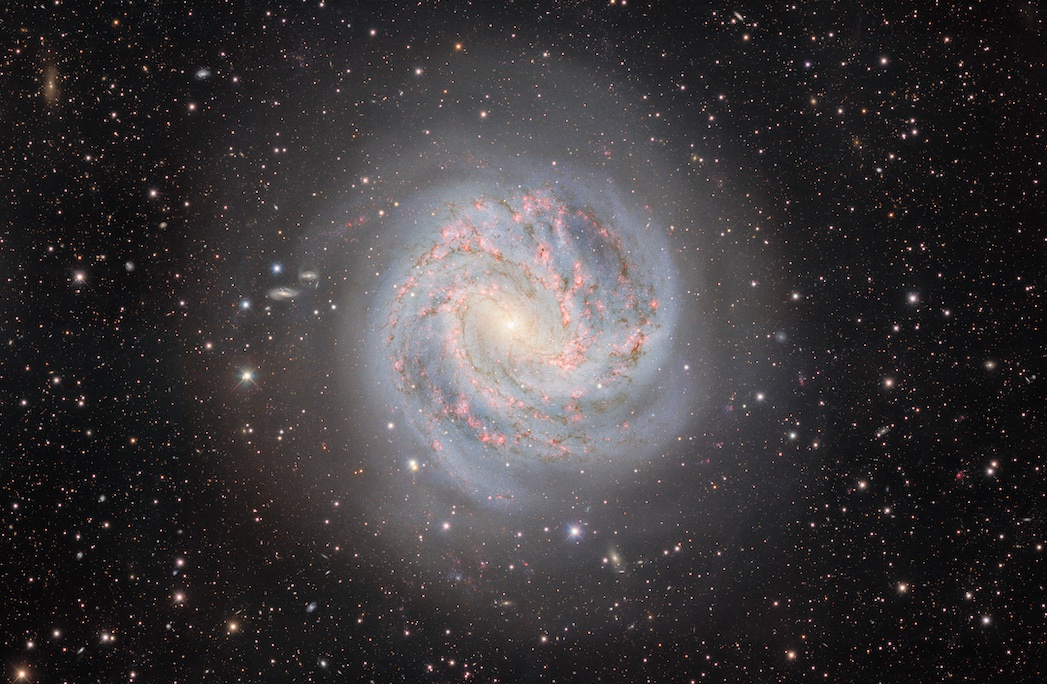
- The galaxy's prominent spiral arms are notable for housing numerous luminous blue star clusters and extensive pink emission nebulae, signifying active stellar nurseries.
- The observed high rate of star formation within M83 is hypothesized to stem from a past galactic interaction, with potential causes including an encounter with NGC 5253 or the presence of a second nucleus in its core.
The Southern Pinwheel Galaxy (M83) in Hydra checks almost every box an amateur astronomer could desire. This stunning barred spiral spans a hefty 14′ and, at magnitude 7.5, ranks among the sky’s 10 brightest galaxies. Its only drawback is location — at a declination of –30°, it lies farther south than any other galaxy in Messier’s catalog. M83 stands out for its striking spiral arms, which feature an abundance of glittering blue star clusters and the pinkish emission nebulae that give birth to them. Astronomers think the galaxy’s high rate of star formation stems from an encounter with another galaxy. Some researchers suspect the nearby dwarf irregular NGC 5253 is the cause, while others point to a possible second nucleus in M83’s core as the remnant of the offending galaxy.